Quick Answer: Yes, marriage therapy works for most couples who commit to the process. Research consistently shows that structured, evidence-based couples counseling improves relationship satisfaction, communication, and emotional connection for the majority of couples who attend. Results depend on the approach used, how early couples seek help, and both partners' willingness to engage.
Key Takeaways
- Research supports that evidence-based marriage therapy helps roughly 70% of couples who participate improve their relationship quality
- The most effective approaches include the Gottman Method, Emotionally Focused Therapy (EFT), and Cognitive Behavioral Therapy (CBT) for couples
- Most couples begin noticing meaningful change between 8 and 20 sessions, though some issues take longer
- Marriage therapy is most effective when couples seek help early, before patterns become deeply entrenched
- Even if one partner is initially reluctant, therapy can still produce positive outcomes
- Marriage therapy can help after infidelity, though recovery typically requires more time and commitment
- Cost ranges widely, and affordable clinical therapy options exist, including insurance coverage and sliding-scale fees
- Choosing a licensed clinician with specialized couples training makes a significant difference in outcomes
What Does Marriage Therapy Actually Do?
Marriage therapy gives couples a structured, safe space to identify unhealthy patterns, improve communication, and rebuild emotional connection. A licensed clinician acts as a skilled guide, not a referee, helping both partners feel heard while introducing evidence-based tools for lasting change.
In practical terms, sessions typically focus on:
- Identifying negative cycles that keep couples stuck in the same arguments
- Building communication skills so both partners can express needs without defensiveness
- Processing unresolved hurt from past conflicts or betrayals
- Strengthening emotional intimacy and shared meaning in the relationship
- Creating concrete agreements about how to handle recurring issues
The work doesn't stop when you leave the session. A good therapist will encourage you to practice new skills between appointments, which is where real change takes root. For additional strategies to support your progress, see these tips for supporting mental health between therapy sessions.
Marriage Therapy Success Rates: What Do the Statistics Show?
The evidence base for couples therapy is strong. Studies on Emotionally Focused Therapy show that approximately 70-75% of couples move from distress to recovery, with around 90% showing significant improvement (Johnson et al., research on EFT outcomes). The Gottman Method shows similarly strong results in reducing conflict and increasing relationship satisfaction.
It is worth noting that "success" means different things to different couples. For some, it means staying together with a healthier dynamic. For others, it means separating with clarity, mutual respect, and less harm to children or shared lives.
Key factors that improve outcomes:
- Seeking help before the relationship has been in distress for many years
- Both partners being willing to examine their own role in problems
- Working with a licensed clinician trained specifically in couples modalities
- Attending sessions consistently rather than sporadically
How Long Does It Take to See Results from Couples Therapy?
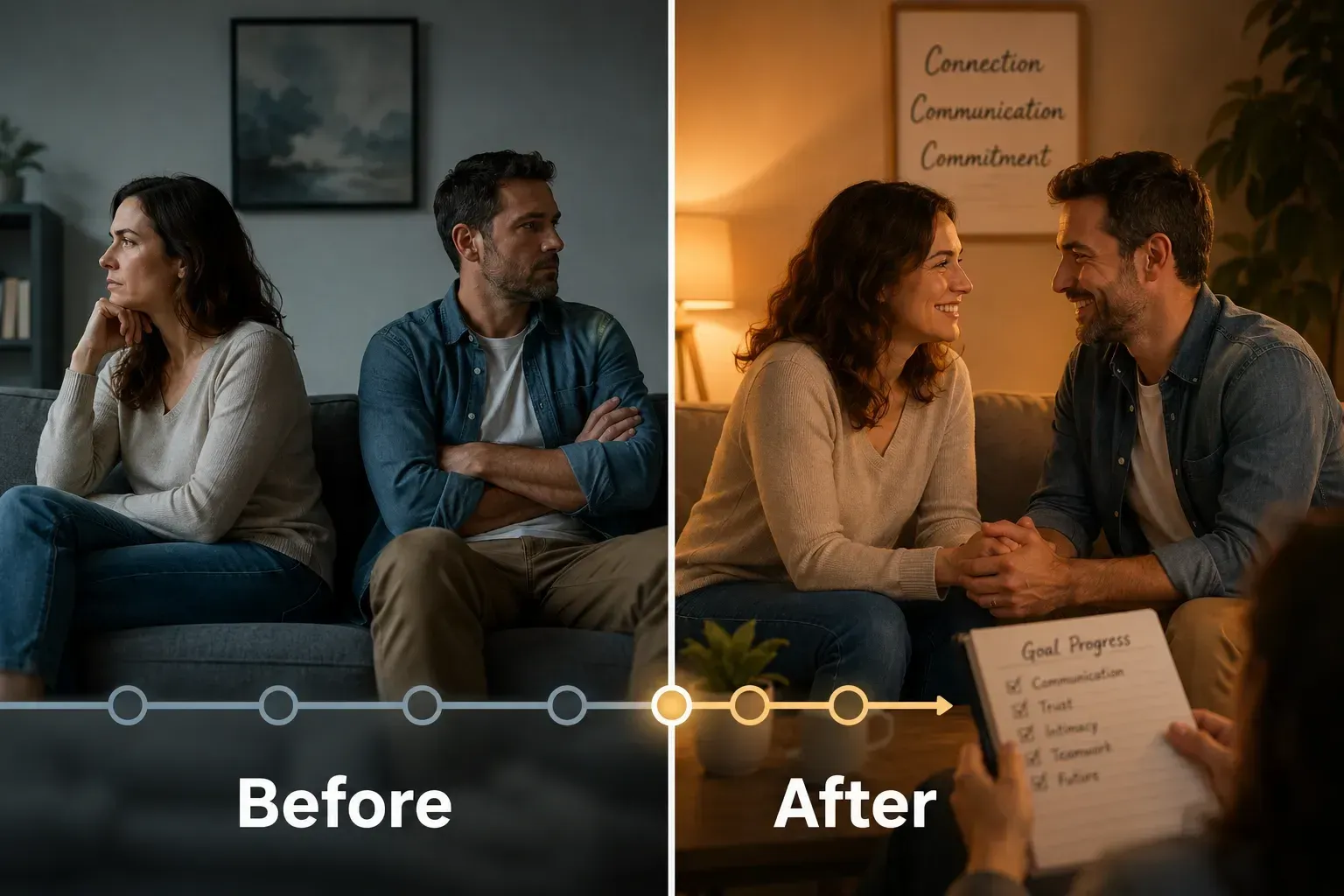
Most couples notice early shifts in communication and understanding within 4 to 6 sessions. Deeper, more durable change typically takes 12 to 20 sessions for moderate relationship difficulties. Severe issues, including infidelity or long-standing emotional disconnection, may require 6 months or more of consistent work.
A useful benchmark: if you complete 8 sessions and feel no movement at all, it is worth discussing the approach with your therapist or considering whether the fit is right. Progress does not have to be dramatic to be real. Small shifts in how you listen or respond to each other are meaningful early signs.
For a structured starting point, the 8-week couples therapy workbook can complement your sessions with guided exercises.
When Is Marriage Therapy Not Recommended?
Marriage therapy is not appropriate in all situations. It is not recommended, and can sometimes cause harm, when:
- Active domestic violence or abuse is present. Individual safety must come first. Couples therapy in this context can increase risk for the person being harmed.
- One partner has an untreated severe mental health condition that requires individual stabilization before joint work can be productive.
- One partner has already decided to end the relationship and is attending only to manage the other person's reaction. Therapy works best when both people have genuine uncertainty or hope.
- Active addiction is ongoing and untreated. Substance use disorders typically need individual treatment before couples work can hold.
If any of these apply to your situation, a licensed clinician can help you identify the right path forward, which may include individual therapy first.
Marriage Therapy vs. Divorce: What Should You Do?
Marriage therapy and divorce are not opposites. Therapy can help you make a clearer, more informed decision about whether to stay or separate, rather than making that choice from a place of exhaustion or crisis.
Consider marriage therapy first if:
- You still feel some care for your partner but are stuck in painful patterns
- You have children and want to make a thoughtful, informed decision
- You haven't yet worked with a professional to address the core issues
- You're unsure whether your problems are fixable or not
Consider that therapy may confirm separation is healthiest if:
- Core values and life goals are fundamentally incompatible
- There is ongoing abuse, and safety cannot be assured
- Both partners have disengaged emotionally over a long period
Either way, working with a compassionate, licensed clinician gives you clarity. Read more about the ultimate guide to couples counseling to understand what the process looks like before you decide.
How Much Does Marriage Therapy Cost?
The cost of marriage therapy varies depending on location, therapist credentials, and whether you use insurance. In the DC, Maryland, Virginia, and Delaware area, sessions typically range from $100 to $250 per session without insurance.
Many insurance plans now cover couples counseling, especially when a partner has a diagnosable condition such as depression or anxiety. Sliding-scale fees and affordable clinical therapy options also exist for those with financial constraints.
At Serenity Psychotherapy Group, affordable clinical therapy is a core commitment. The goal is to make quality care accessible without asking you to choose between your relationship and your budget. You can review insurance and billing details at the insurance and billing page.
What Happens If Only One Spouse Wants Therapy?
One partner wanting therapy more than the other is extremely common. The good news: individual therapy focused on relationship dynamics can still produce meaningful change, and it sometimes motivates the reluctant partner to join later.
If your partner refuses to attend, you can:
- Attend individual therapy to work on your own communication patterns and responses
- Share what you're learning without pressure, which sometimes reduces a partner's resistance
- Ask your therapist to write a brief letter explaining the process, which can ease fears about being "ganged up on"
- Consider a single consultation session framed as "just trying it once"
Marriage therapy is most powerful when both partners participate, but starting alone is far better than doing nothing.
Marriage Therapy Techniques That Actually Work
Evidence-based approaches make a real difference in outcomes. The most well-researched techniques used in marriage therapy include:
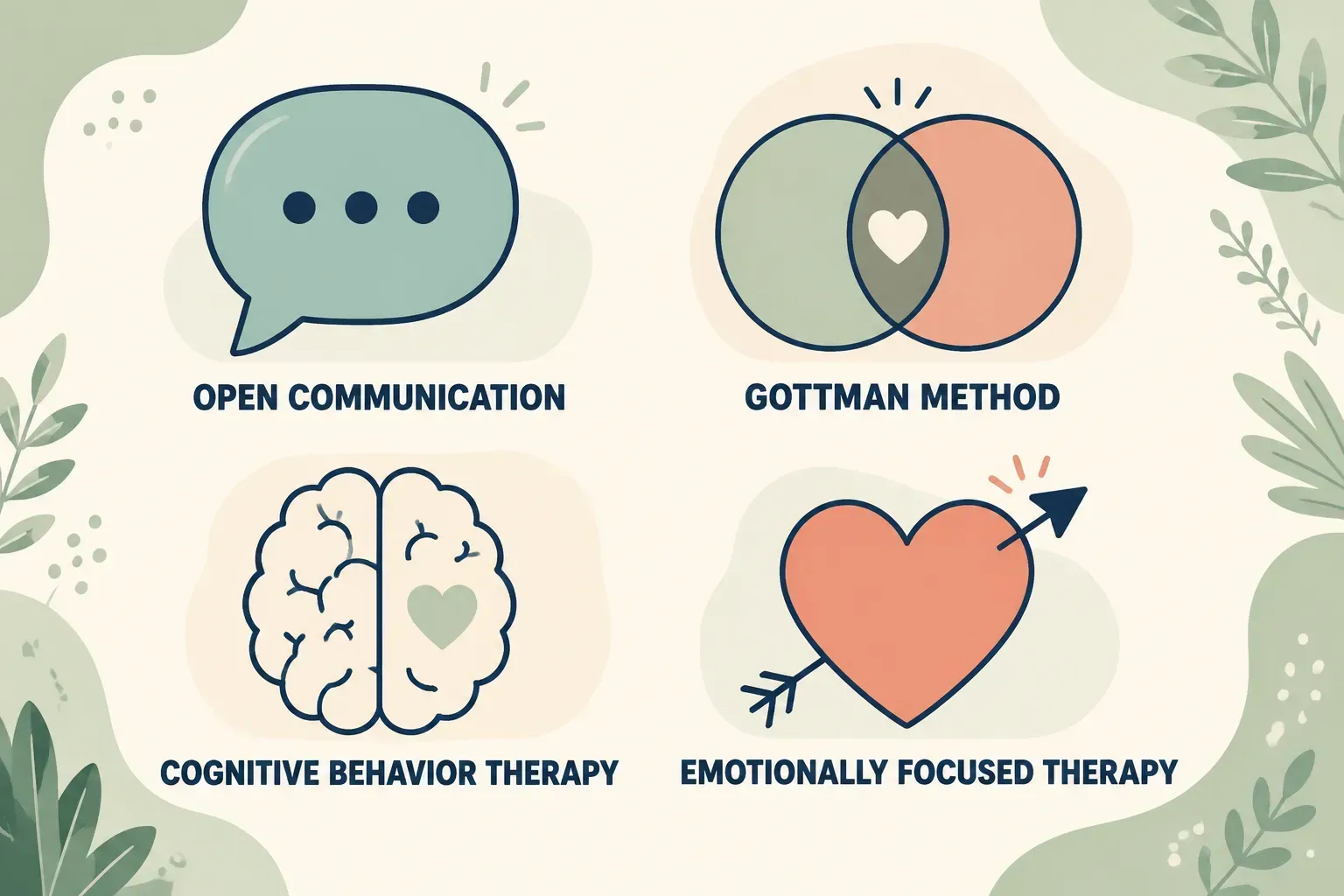
Gottman Method: Based on decades of research, this approach focuses on building friendship, managing conflict constructively, and creating shared meaning. It uses specific exercises to interrupt destructive patterns like criticism, contempt, defensiveness, and stonewalling.
Emotionally Focused Therapy (EFT): Developed by Dr. Sue Johnson, EFT helps couples identify and change the emotional cycles that drive disconnection. It has one of the strongest research bases of any couples approach.
Cognitive Behavioral Couples Therapy (CBCT): Focuses on identifying and changing thought patterns and behaviors that harm the relationship. Particularly useful when anxiety or depression is affecting the partnership.
Narrative Therapy: Helps couples separate their identity from their problems and rewrite the story of their relationship in a more empowering way.
A skilled licensed clinician will tailor these methods to your specific situation rather than applying a one-size-fits-all approach. For a broader look at therapeutic methods, see exploring different types of psychotherapy.
Does Marriage Therapy Help After Infidelity?
Yes, marriage therapy can help couples recover after infidelity, but it requires honest commitment from both partners and realistic expectations about the timeline. Research and clinical experience both suggest that recovery from betrayal typically takes one to two years of consistent work.
Effective therapy after infidelity usually involves:
- The partner who caused the betrayal taking full accountability without defensiveness
- Creating safety for the hurt partner to express grief and anger
- Understanding the relational context that allowed the betrayal, without using it as an excuse
- Rebuilding trust through consistent, transparent actions over time
Not every couple chooses to stay together after infidelity, and that is a valid outcome too. What therapy provides is a supported, thoughtful process rather than a reactive one. For more on building stronger bonds through couples therapy, including after serious ruptures, our resource guide goes deeper.
What to Expect in Your First Marriage Therapy Session
Your first session is primarily an assessment. The therapist will ask each of you about your relationship history, what brought you in, and what you each hope to get from the process. It is normal to feel nervous, and a good therapist will create a safe space where both of you feel equally respected.
What typically happens:
- Brief introductions and explanation of confidentiality
- Each partner shares their perspective on the main concerns
- The therapist gathers background on the relationship history
- Together, you discuss initial goals for therapy
- The therapist explains their approach and answers your questions
You will not be expected to resolve anything in the first session. The goal is simply to begin.
Common Mistakes Couples Make in Therapy
Even with the best intentions, couples sometimes undermine their own progress. Watch for these patterns:
- Waiting too long. On average, couples wait six years after problems begin before seeking help. Earlier is almost always better.
- Treating therapy as a last resort. This creates pressure that makes the process harder. Think of it as a proactive investment, not a final attempt.
- Using sessions to "win" arguments. Therapy is not a courtroom. Coming in to prove your partner wrong stalls progress quickly.
- Skipping practice between sessions. Skills learned in the room need to be used at home to stick.
- Stopping too soon. When things feel better, it is tempting to stop. But consolidating gains takes time.
Marriage Therapy Alternatives to Try First
If you're not ready for formal marriage therapy, or want to supplement it, these approaches can help:
- Couples workshops or retreats: Structured programs like the Gottman Weekend Workshop offer intensive skill-building in a group format
- Self-guided workbooks: A structured couples therapy workbook can introduce key concepts before or between sessions
- Communication skill resources: Practical guides on ways to improve communication in relationships offer concrete starting points
- Individual therapy: Working on your own patterns can shift relationship dynamics even without couples sessions
- Online telehealth therapy: Flexible and accessible, telehealth makes it easier to attend consistently. Learn more in this guide to online telehealth therapy
These alternatives work best as complements to, not replacements for, professional marriage therapy when the issues are significant.
How to Know If Your Marriage Therapist Is Right for You
The therapeutic relationship matters as much as the techniques used. A good couples therapist should feel neutral and fair to both partners, not aligned with one side.
Signs your therapist is a good fit:
- Both partners feel heard and respected, not blamed
- The therapist has specific training in couples modalities, not just individual therapy
- Sessions feel productive, even when they are emotionally challenging
- The therapist sets clear goals and checks in on progress
- You feel safe bringing up difficult topics
Signs it may be time to find someone else:
- One partner consistently feels ganged up on
- Sessions feel like venting without any direction
- The therapist shares personal opinions about who is "right"
- No structure or goals are ever discussed
At Serenity Psychotherapy Group, our licensed clinicians bring specialized training, culturally sensitive care, and a personalized approach to every couple's journey. If you're in DC, Maryland, Virginia, or Delaware, you can book a consultation to find the right fit for your relationship.
Conclusion
Marriage therapy works, and the evidence is clear. For couples willing to engage honestly and consistently, it offers a real path toward better communication, deeper connection, and lasting change. The key is not waiting until things feel irreparable. Seeking support early, choosing a licensed clinician with proper training, and committing to the process between sessions all significantly improve your chances of a positive outcome.
Your relationship deserves compassionate care and personalized support. Whether you're navigating conflict, recovering from betrayal, or simply feeling disconnected, marriage therapy provides the tools and the safe space to move forward together.
If you're ready to take the next step, Serenity Psychotherapy Group offers affordable clinical therapy for individuals, couples, and families across DC, Maryland, Virginia, and Delaware. Reach out to our team of licensed clinicians at serenitypsychotherapygroup.com or call 202-990-2707 to begin your journey.
Frequently Asked Questions
How do I know if my marriage needs therapy?
If you and your partner are having the same arguments repeatedly without resolution, feeling emotionally disconnected, or struggling to communicate without conflict, those are clear signs that marriage therapy could help. You don't need to be in crisis to benefit.
Is marriage therapy the same as couples counseling?
The terms are often used interchangeably. Marriage therapy typically refers to work with married couples, while couples counseling can include unmarried partners. The techniques and goals are largely the same.
Can marriage therapy make things worse?
In rare cases, poorly matched therapy or an undertrained therapist can increase conflict temporarily. This is why working with a licensed clinician who specializes in couples work matters. A skilled therapist manages sessions so both partners feel safe.
How often should couples attend marriage therapy?
Most couples start with weekly sessions to build momentum. As progress is made, sessions may shift to every two weeks. Consistency matters more than frequency.
Does online marriage therapy work as well as in-person?
Research suggests telehealth couples therapy produces comparable outcomes to in-person sessions for most couples. It also removes barriers like scheduling and commuting, which helps couples attend more consistently.
What if we tried marriage therapy before and it didn't help?
A previous negative experience often reflects a poor therapist fit or an approach that wasn't right for your specific issues. It is worth trying again with a clinician who has specialized couples training and a different evidence-based method.
Is marriage therapy confidential?
Yes. Licensed clinicians are bound by strict confidentiality rules. The main exceptions are situations involving safety, such as a risk of harm to self or others.
How do we find a marriage therapist who understands our cultural background?
Look for a therapist who explicitly offers culturally sensitive care. At Serenity Psychotherapy Group, our team is trained in cultural sensitivity and offers services in both English and Farsi to serve diverse communities across the DMV area.
References
- Johnson, S. M. (2004). The Practice of Emotionally Focused Couple Therapy: Creating Connection (2nd ed.). Brunner-Routledge.
- Gottman, J. M., & Silver, N. (1999). The Seven Principles for Making Marriage Work. Crown Publishers.
- Shadish, W. R., & Baldwin, S. A. (2003). Meta-analysis of MFT interventions. Journal of Marital and Family Therapy, 29(4), 547-570.
- Lebow, J. L., Chambers, A. L., Christensen, A., & Johnson, S. M. (2012). Research on the treatment of couple distress. Journal of Marital and Family Therapy, 38(1), 145-168.
- American Association for Marriage and Family Therapy. (2023). About Marriage and Family Therapists. https://www.aamft.org