
Quick Answer: Couples counseling is a form of evidence-based therapy where a licensed clinician works with two partners to improve communication, resolve conflict, and rebuild connection. Sessions typically last 50 minutes, occur weekly or biweekly, and most couples begin noticing meaningful change within 8 to 20 sessions. It works for couples at many stages, from early friction to serious crisis.
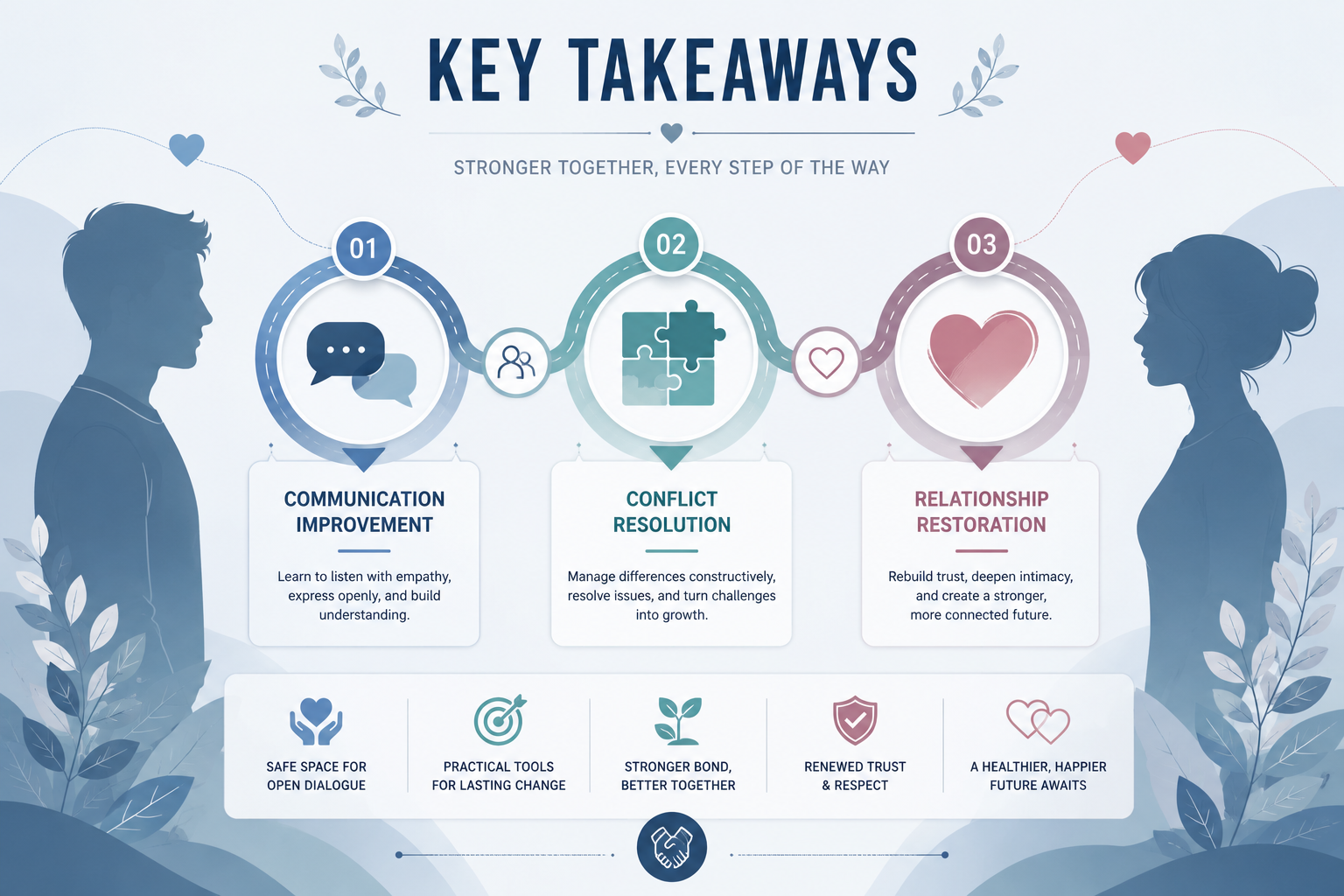
Key Takeaways
- Couples counseling is most effective when both partners are willing to engage, but one-partner sessions can still create positive change.
- Common evidence-based approaches include the Gottman Method, Emotionally Focused Therapy (EFT), and Cognitive Behavioral Therapy (CBT) for couples.
- Cost ranges widely, from roughly $100 to $250 per session out of pocket, though insurance and sliding-scale options can reduce this significantly.
- Most couples see meaningful progress within 8 to 20 sessions; crisis situations may require more.
- Online couples counseling is considered comparably effective to in-person therapy for most relationship issues.
- Therapy can be valuable even when divorce is being considered, helping partners make clearer, more informed decisions.
- Choosing a culturally sensitive, licensed clinician who specializes in relationship therapy makes a measurable difference in outcomes.
- Common mistakes include waiting too long to seek help, treating sessions as a place to "win" arguments, and not practicing skills between appointments.
What Exactly Happens in a Couples' Therapy Session
A couples therapy session is a structured, confidential conversation guided by a licensed clinician. The therapist does not take sides. Instead, they help both partners slow down, listen more carefully, and express themselves in ways the other person can actually hear.
Here is what a typical session looks like:
- Check-in: The therapist asks how the week went and what each partner wants to focus on.
- Exploration: The clinician guides a conversation around a specific issue, pattern, or goal.
- Skill-building: Partners may practice a communication technique or work through a conflict in real time.
- Wrap-up: The session closes with a summary and often a small exercise to try before the next appointment.
Early sessions often involve individual history, so the therapist understands each person's background and what they bring to the relationship. This is part of the personalized care that makes couples counseling genuinely useful rather than generic.
For a deeper look at what the process involves, the Couples Counseling Services at Serenity Psychotherapy page outlines what to expect from the first contact onward.
What Are the Signs You Really Need Professional Relationship Help
Most couples wait an average of six years after serious problems begin before seeking therapy, according to research by the Gottman Institute. By then, negative patterns are often deeply entrenched.
You may benefit from couples counseling if:
- The same argument keeps repeating without resolution
- One or both partners feel more like roommates than romantic partners
- There has been a breach of trust, such as infidelity or financial deception
- Communication has become cold, contemptuous, or has stopped altogether
- A major life change, such as a new baby, job loss, or relocation, has created distance
- One partner is considering leaving the relationship
Seeking help early is not a sign of failure. It is one of the most practical things a couple can do. If you are unsure whether your situation calls for professional support, reading about the signs that it may be time to seek therapy can help you decide.
Are There Different Types of Couples Counseling Approaches
Yes, and the approach your therapist uses matters. Different methods work better for different situations.
| Approach | Best For | Core Focus |
|---|---|---|
| Gottman Method | Communication breakdown, conflict | Research-based skill-building |
| Emotionally Focused Therapy (EFT) | Emotional disconnection, attachment wounds | Rebuilding emotional bonds |
| Cognitive Behavioral Therapy (CBT) | Negative thought patterns, anxiety in relationships | Changing unhelpful thinking |
| Imago Relationship Therapy | Childhood wounds affecting the relationship | Understanding each other's deeper needs |
| Dialectical Behavior Therapy (DBT) | Emotional dysregulation, intense conflict | Emotion regulation and distress tolerance |
Licensed clinicians at Serenity Psychotherapy use evidence-based methods tailored to each couple's specific situation. If you are curious about one of these modalities, learning about Dialectical Behavior Therapy is a good starting point for understanding how structured skill-based therapy works.
How Much Does Couples Counseling Cost on Average
Out-of-pocket costs for couples counseling typically range from $100 to $250 per session in the DC, Maryland, Virginia, and Delaware area, with rates varying based on the therapist's credentials and location.
Insurance coverage: Many insurance plans cover couples counseling when one partner has a diagnosed mental health condition. Coverage varies significantly by plan and state. It is worth calling your insurer directly to ask about "marriage and family therapy" benefits.
Ways to reduce cost:
- Ask about sliding-scale fees based on income
- Check whether your employer's Employee Assistance Program (EAP) offers free sessions
- Consider telehealth sessions, which are sometimes priced lower than in-person appointments
Affordable clinical therapy does not mean lower quality. Serenity Psychotherapy Group is committed to making care accessible without sacrificing the expertise or compassion every couple deserves. You can review insurance and billing information to understand your options before booking.
How Long Does Couples Counseling Usually Take to See Results
Most couples begin noticing meaningful improvement within 8 to 20 sessions, though this depends on the severity of the issues and how consistently both partners engage with the process.
A general timeline:
- Sessions 1 to 3: Assessment, building rapport, identifying core patterns
- Sessions 4 to 10: Active skill-building and working through specific conflicts
- Sessions 10 to 20+: Deepening change, addressing underlying issues, consolidating progress
Couples dealing with long-standing patterns or serious breaches of trust may need more time. Those who practice skills between sessions and remain open to feedback tend to progress faster.
Can Couples Therapy Work If Only One Partner Wants to Try
Yes, though it is more challenging. When only one partner attends, it is often called "individual therapy for relationship issues." A skilled clinician can help that person shift their own patterns, which frequently influences the dynamic between both partners.
If your partner is reluctant, consider:
- Framing it as "getting support for yourself" rather than fixing the relationship
- Attending a session alone first to reduce the pressure
- Sharing articles or resources that normalize therapy for couples
Sometimes one partner's willingness to change is enough to shift the entire relationship. It is worth starting, even if the other person is not ready yet.
Is Couples Therapy Worth It If You're Already Thinking About Divorce
Couples counseling can be valuable even when divorce is on the table. In fact, some therapists specialize in "discernment counseling," which is specifically designed to help couples decide whether to work on the relationship or separate with clarity and respect.
Therapy at this stage can help both partners:
- Understand what went wrong and why
- Make a more informed, less reactive decision
- Separate with less conflict and more compassion, especially when children are involved
It is not about forcing a couple to stay together. It is about making sure whatever decision is made comes from a grounded, informed place rather than a moment of pain or exhaustion. For more on how counseling addresses recurring patterns, see how couples counseling can help stop negative cycles.

Is Online Couples Counseling as Effective as In-Person Sessions
Research published in peer-reviewed journals, including studies reviewed by the American Psychological Association, suggests that online therapy produces outcomes comparable to in-person therapy for most mental health concerns, including relationship issues.
Online couples counseling works well when:
- Both partners can be in the same space during the session
- There is a reliable internet connection and a private room
- The therapist is licensed in your state and experienced with telehealth
It may be less ideal for couples in acute crisis or those dealing with domestic safety concerns. For those situations, in-person care with a trained clinician is strongly recommended.
Serenity Psychotherapy Group offers telehealth services across Maryland, Virginia, Washington DC, and Delaware. For a thorough overview of what online therapy involves, the Online Telehealth Therapy guide covers the process in detail.
What Are the Most Common Mistakes Couples Make in Therapy
Even with the best intentions, couples sometimes undermine their own progress. The most common mistakes include:
- Waiting too long: The longer harmful patterns continue, the harder they are to change.
- Treating sessions like a courtroom: Therapy is not the place to build a case against your partner. It is a safe space to understand each other.
- Skipping practice between sessions: Skills learned in the room need to be used at home to stick.
- Expecting immediate results: Real change takes time and consistency.
- Hiding information from the therapist: Full honesty, even when uncomfortable, is what makes the process work.
How Do You Choose the Right Therapist for Your Relationship Issues
The right therapist is licensed, experienced with couples, and someone both partners feel comfortable with. Credentials matter, but so does fit.
When evaluating a therapist, ask:
- Are you licensed in my state? (In Maryland, Virginia, DC, or Delaware?)
- Do you specialize in couples or relationship therapy?
- What modalities do you use?
- Do you have experience working with couples from our cultural background or community?
Culturally sensitive care is especially important for couples from LGBTQ+ communities, multicultural partnerships, or immigrant backgrounds. Serenity Psychotherapy Group offers care in both English and Farsi, and its licensed clinicians are trained in cultural sensitivity. You can also explore the benefits of couples therapy to better understand what a good therapeutic relationship can offer.
What Should You Do If Therapy Isn't Helping Your Relationship
If you have attended 10 or more sessions and feel no movement, it is reasonable to reassess. Therapy not working can mean several things:
- The approach is not the right fit for your specific issues
- One or both partners are not fully engaged
- The therapist's style does not match what you need
- The underlying issues are more complex than originally identified
Steps to take:
- Have an honest conversation with your therapist about the lack of progress.
- Ask whether a different approach or referral might help.
- Consider whether individual therapy alongside couples work would be beneficial.
- If needed, seek a second opinion from another licensed clinician.
Changing therapists is not a failure. It is an act of commitment to your own journey and your relationship.
Frequently Asked Questions
How do we start couples counseling?
Contact a licensed therapist or practice directly, schedule an intake appointment, and expect the first one or two sessions to focus on assessment and goal-setting. Serenity Psychotherapy Group makes it easy to
book a consultation online.
Is what we say in couples therapy confidential?
Yes. Licensed therapists are bound by strict confidentiality laws. Exceptions exist only in cases involving imminent safety risks.
Can couples counseling help with infidelity?
Yes. Many couples work through infidelity in therapy. It requires time, honesty, and commitment from both partners, but recovery is possible with the right support.
Do we have to be married to attend couples counseling?
No. Couples counseling is for any two people in a committed relationship, regardless of marital status, gender, or sexual orientation.
What if we disagree about what the problems are?
That is completely normal and is often the starting point of therapy. A skilled clinician will help both partners articulate their perspectives and find common ground.
How often should we attend sessions?
Weekly sessions are most common at the start. As progress is made, many couples shift to biweekly or monthly check-ins.
Is couples counseling only for relationships in crisis?
No. Many couples use therapy proactively, to strengthen communication, prepare for major life transitions, or simply invest in their relationship before problems escalate.
What if my partner refuses to attend?
You can still benefit from individual therapy focused on relationship patterns. A therapist can help you navigate the situation and, in some cases, your partner may become more open over time.
Conclusion: Your Next Step Toward a Stronger Relationship
This ultimate guide to couples counseling covers the full picture, from what happens in a first session to how to choose the right therapist and what to do if progress stalls. The most important takeaway is this: seeking help is a sign of strength, not weakness.
Whether your relationship is in crisis or you simply want to communicate better, evidence-based couples counseling with a compassionate, licensed clinician can make a real difference. You do not have to wait until things feel impossible.
If you are in Maryland, Virginia, Washington DC, or Delaware, Serenity Psychotherapy Group is here to support your journey with personalized care that honors your background, your values, and your goals.
Ready to take the first step? Schedule a consultation or call 202-990-2707 to connect with a licensed clinician who is ready to help.
References
- Gottman, J. M., & Silver, N. (1999). The Seven Principles for Making Marriage Work. Crown Publishers.
- Johnson, S. M. (2004). The Practice of Emotionally Focused Couple Therapy. Brunner-Routledge.
- Lebow, J. L., Chambers, A. L., Christensen, A., & Johnson, S. M. (2012). Research on the treatment of couple distress. Journal of Marital and Family Therapy, 38(1), 145–168.
- American Psychological Association. (2020). Telehealth guidance by state during COVID-19. APA Practice Organization.
- Doss, B. D., Atkins, D. C., & Christensen, A. (2003). Who's dragging their feet? Husbands and wives seeking marital therapy. Journal of Marital and Family Therapy, 29(2), 165–177.